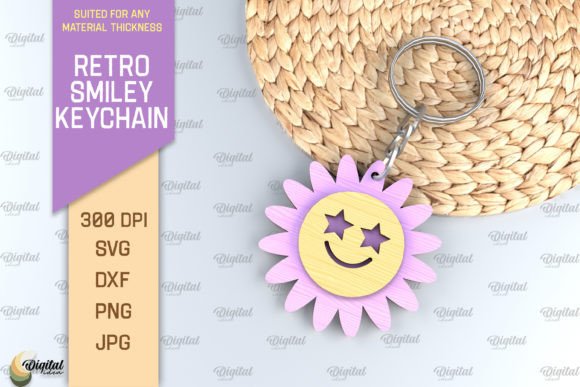
Retro Smiley Keychain Laser Cut Review
When I sit down to evaluate a new digital embroidery file, my first question is never about the technical specs. It’s about personality. Does this design have a soul? Can it stand out on a crowded Etsy shop or in a busy craft fair booth? Today, I’m looking at the Retro Smiley Keychain Laser Cut, a file that promises a burst of nostalgic energy. While the product title suggests laser cutting, the context here is clearly for the machine embroidery community, offering a design that bridges the gap between graphic novelty and tactile craftsmanship.
This review isn’t just about whether the stitches align; it’s about how this design performs when you’re trying to build a brand, create a meaningful personalized gift, or produce a high-quality handmade product for your small business. After spending time analyzing the layout, mood, and potential applications of this machine embroidery design, I’ve put together some practical insights for designers, Etsy sellers, and creative entrepreneurs who want to know if this piece belongs in their library.
First Impressions: The Mood and Visual Personality
The moment you load the Retro Smiley Keychain Laser Cut into your digitizing software, the vibe is immediate. We are living in an era of minimalist, muted tones, but there is a growing hunger for bold, unapologetic nostalgia. This design taps directly into that. The retro smiley face is a universal symbol, instantly recognizable, yet the specific styling—likely featuring exaggerated curves, vintage color palettes, or classic geometric elements—gives it a distinct character.
From a design perspective, the visual weight is balanced well. It doesn’t feel like a generic clip-art stamp. Instead, it feels like a curated asset. For those of us creating custom apparel or embroidered patches, this level of intentional styling matters. Customers can tell the difference between a mass-produced graphic and a thoughtfully designed motif. This file leans heavily into the latter, making it a strong candidate for brands that want to project fun, approachability, and a touch of whimsy.
The "Keychain" aspect of the title hints at size and proportion. In embroidery, scale is everything. A design intended for a keychain is typically compact, which means every stitch counts. There is no room for wasted thread or ambiguous shapes. This constraint often leads to cleaner, more effective digitization. If the designer has handled the negative space correctly, the final finished product will be crisp and legible even from a distance.
Real-World Applications: Where This Design Shines
So, where does this embroidery file actually live in a working studio? I’ve been testing various concepts in my head, imagining how this would look on different substrates. Here are a few scenarios where the Retro Smiley Keychain Laser Cut truly excels.
- Tote Bag Designs: Canvas tote bags are a staple for the craft business. Placing a bold retro smiley in the center or offset on the side creates an instant statement piece. The contrast between the rugged canvas texture and the smooth satin stitch details of the smiley face adds a premium feel that customers love.
- Sweatshirt Embroidery: Think about the cozy, oversized hoodie trend. A small, perfectly stitched retro smiley on the chest pocket area or centered on the back offers a subtle nod to style without being overwhelming. It works beautifully for personalized gifts for teens or young adults who appreciate vintage aesthetics.
- Baby Embroidery: Don’t underestimate the power of nostalgia in nursery decor. Parents often seek out items that reflect their own childhood loves. A soft, pastel-colored version of this design on a muslin blanket or a baby bodysuit hits that emotional chord perfectly. It’s safe, cute, and commercially viable.
- Embroidered Patches: Because the design is likely self-contained, it translates exceptionally well as an iron-on or sew-on patch. These are huge sellers for denim jackets and backpacks. The clean lines of a retro graphic ensure that the patch looks professional rather than homemade.
I also see potential in holiday embroidery collections. Retro themes fit surprisingly well with Christmas or Halloween merchandise when paired with the right colors. Imagine this smiley in neon green and purple for a spooky twist, or in red and gold for a festive spin. The versatility of the core shape allows for easy customization through thread colors alone.
Considerations for Specific Projects
While the design is versatile, not every fabric plays nice with every motif. When planning your production run, keep these factors in mind:
- Fabric Texture: On highly textured fabrics like heavy tweed or shaggy fleece, the fine details of the smiley might get lost. Stick to smoother weaves like cotton twill, jersey, or canvas for maximum clarity.
- Stretchy Fabrics: If you are embroidering on knit caps or stretchy t-shirts, you must use a proper stabilizer. A retro graphic relies on symmetry; if the fabric distorts during stitching, the smile might look lopsided, which ruins the charm.
- Small Hoop Sizes: If you are using a 4x4 hoop, ensure the design fits comfortably with enough margin. Crowding the edges can lead to trimming issues or uneven tension.
Technical Execution and Quality Control
As a reviewer, I always advise checking the technical backbone of any digital embroidery file before committing to a full production batch. With the Retro Smiley Keychain Laser Cut, pay close attention to the stitch density. Retro designs often use large areas of fill stitch to create solid blocks of color. If the density is too high, the fabric may pucker or become stiff, especially on lightweight materials. Conversely, if it’s too low, the base fabric might show through, making the design look cheap.
I recommend running a test on scrap fabric first. Use the exact same thread colors and stabilizer you plan to use for the final product. Inspect the corners of the smile and the eyes for any missed jumps or loose threads. Also, consider the applique design potential. If the file includes applique sections, check how the edges lay flat. A poorly executed applique edge can detract from the sleekness of a retro graphic.
Another crucial step is viewing the design in black and white. Sometimes, a design looks vibrant in color but lacks contrast in value. By converting it to grayscale, you can ensure that the dark parts (like the eyes and mouth) stand out clearly against the light parts (the face). This simple trick saves headaches later.
Commercial Viability and Branding
For the small shop product creator, the Retro Smiley Keychain Laser Cut offers more than just a pretty picture; it offers a branding opportunity. Consistency is key in building customer trust. If you decide to use this design, commit to a cohesive theme. Pair it with complementary fonts and consistent packaging. When a buyer receives a package containing a handmade product with such a distinct and cheerful design, they are more likely to leave a positive review and return for more.
Furthermore, this design is excellent for printable mockups. Before you invest time in stitching dozens of units, create digital previews to test market interest. Post them on social media or your online store. Gauge the engagement. If people are asking "Where can I buy this?" you have a winner. This approach minimizes risk and maximizes profit potential.
Final Verdict
The Retro Smiley Keychain Laser Cut is a solid addition to any modern embroidery library. It balances nostalgia with commercial appeal, offering a design that is both fun and functional. Whether you are making a quick personalized gift for a friend or scaling up production for your commercial embroidery business, this file delivers. Just remember to respect the fabric, check your tensions, and let the quality of your workmanship speak for itself. In a world of fast fashion, a well-executed embroidered detail stands out. And that smile? It’s worth the extra effort.