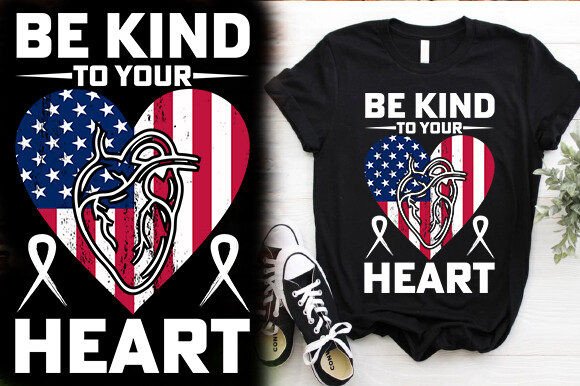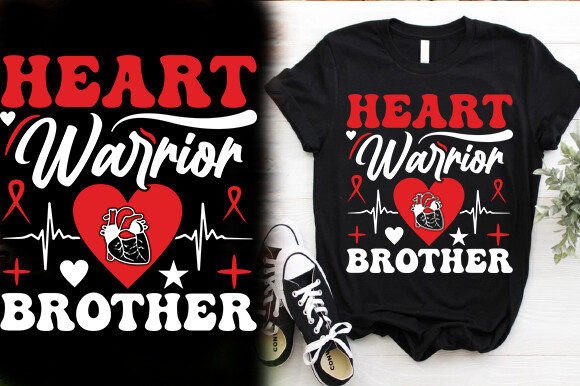
Heart Warrior Nana Tshirt Design Review
As a designer who spends half my life in front of a screen and the other half threading needles for real-world projects, I’ve learned that not every graphic translates well into stitch. There is a distinct gap between a vector file that looks crisp on a monitor and an embroidery design that holds up under tension, friction, and frequent washing. When I first pulled up HEART WARRIOR NANA TSHIRT DESIGN, my immediate instinct was to evaluate its structural integrity as a potential commercial asset rather than just admiring its aesthetic appeal. This is a T-Shirt Designs category entry with Graphics roots, which means we need to bridge the gap between digital illustration and tactile textile art.
First Impressions: Mood and Visual Personality
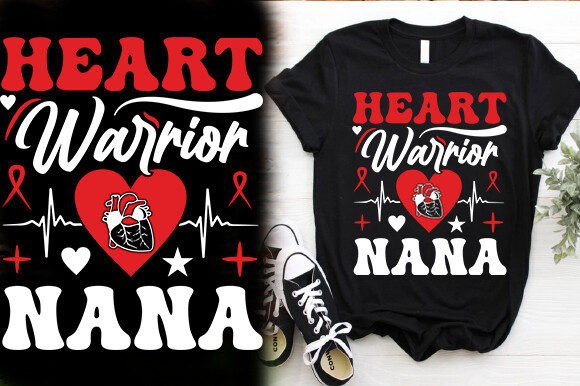
The name alone suggests a narrative. "Warrior" implies strength, resilience, and perhaps a bit of grit, while "Nana" grounds it in warmth, family, and love. Visually, this design strikes a balance between bold iconography and sentimental value. It doesn’t scream for attention with chaotic patterns; instead, it relies on strong shapes and clear negative space. For an embroidery project, this clarity is paramount. Complex gradients or overly intricate line work often get lost in the texture of fabric, but a design built on solid forms tends to read clearly from across a room.
The mood created here is one of empowered affection. It feels like a piece meant for someone who carries weight—literally and emotionally—and deserves recognition for it. In my experience, designs that evoke a specific emotional response tend to perform better in handmade product markets because they connect with the buyer’s desire to celebrate a specific person or role. This isn’t just a heart; it’s a statement piece.
Real-World Application: From Screen to Stitch
I recently considered using HEART WARRIOR NANA TSHIRT DESIGN for a custom order destined for a craft fair booth. The target customer was looking for personalized gifts for grandmothers who are active, tough, and deeply loved. I envisioned this design stitched onto a heavy-duty canvas tote bag or a soft cotton blend sweatshirt. Because the source files are fully editable vectors (EPS 10 and SVG), I could manipulate the scale without losing resolution, ensuring the design would fit perfectly within standard hoop sizes.
When thinking about custom apparel, this design shines on mid-to-large garment panels. On a sweatshirt embroidery project, the contrast between the thread and the fleece texture can add a cozy, dimensional quality. However, I also saw potential in smaller applications. An embroidered patch version of this design could be applied to denim jackets or baseball caps, giving the wearer a subtle badge of honor. The versatility of having 100 resizable vector shapes means I could isolate specific elements if needed, though the full composition stands strong on its own.
For Etsy sellers and small shop products, this design offers high perceived value. A personalized gift featuring a "Warrior Nana" motif resonates with buyers looking for something more unique than generic store-bought items. It fits seamlessly into categories like holiday embroidery (Christmas or Mother’s Day) or even wedding gifts for older relatives. The visual weight of the design ensures it remains legible whether printed on a poster or stitched into a kitchen towel.
Technical Considerations and Fabric Compatibility
While the vector nature of HEART WARRIOR NANA TSHIRT DESIGN makes it highly adaptable, converting it to an embroidery file requires careful planning. Not all fabrics play nice with all stitch types. If you plan to use this on stretchy fabric like jersey knits for t-shirts, you must ensure your stabilizer choice is robust enough to prevent puckering. A cut-away stabilizer is often best for garments that will undergo frequent laundering, maintaining the shape of the fill stitch areas over time.
There are specific scenarios where caution is advised. Avoid placing dense stitch areas on thin fabric or highly textured materials like bouclé wool, as the underlying fabric may show through unevenly. Similarly, if you are working with dark fabric, pay close attention to thread colors. Light threads on dark backgrounds require higher stitch density to ensure opacity, which can make the final product feel stiff. Always test your stitch density on scrap fabric first to gauge the hand-feel of the finished item.
Curved surfaces, such as the front panel of a cap, present another challenge. While the design is resizable, extreme distortion can occur if forced into a small, tight curve. It is better suited for flat surfaces like tote bags, aprons, or pillow covers where the fabric lies taut. If you attempt to apply this to a curved surface, ensure the digitization accounts for the curvature to prevent thread breakage or misalignment.
Design Elements and Stitch Clarity
The design likely utilizes a mix of satin stitch for outlines and running stitch for finer details, supported by fill stitch for the main body of the heart or warrior elements. This combination provides both definition and texture. The clean lines of the vector shapes allow for precise satin stitch edges, which look professional and polished. However, if the design includes tiny decorative accents or lettering, these should be scrutinized. Tiny details often get swallowed by the thickness of embroidery thread, so it is wise to inspect these areas closely during the digitizing phase.
Another practical note involves the color palette. Since the design is fully editable, you have the freedom to adjust thread colors to match specific brand identities or customer preferences. For a boutique branding approach, consider using metallic threads for accents to elevate the "warrior" aspect, or stick to muted pastels for a softer, nursery-friendly vibe. Testing the design in black and white mockups can help verify that the contrast levels remain effective regardless of the color choices made later.
Commercial Viability and Licensing
For commercial embroidery professionals and craft business owners, the fact that this is a digital embroidery file based on vector graphics is a significant advantage. It allows for rapid prototyping and customization. You can create multiple variations of the same core design to offer different styles in your Etsy listings without starting from scratch each time. This efficiency is crucial for maintaining a consistent flow of new inventory.
However, before selling finished items or redistributing the design assets, you must confirm the licensing terms. Ownership of the vector file does not automatically grant unlimited commercial rights for physical goods unless explicitly stated. Always review the license agreement to ensure you are compliant with commercial use policies. This protects your small business from legal issues and builds trust with your customers, who expect ethical sourcing and proper attribution.
Final Verdict
HEART WARRIOR NANA TSHIRT DESIGN is a versatile, emotionally resonant asset that bridges the gap between digital graphics and tangible craftsmanship. Its strong visual identity makes it suitable for a wide range of applications, from baby embroidery items to rugged aprons for the home chef. By paying attention to fabric selection, stabilizer usage, and stitch density, designers can transform this vector graphic into a high-quality finished product that customers will cherish.
Whether you are a seasoned pro looking to expand your catalog or a hobbyist creating a one-of-a-kind personalized gift, this design offers a solid foundation for creativity. Just remember to test thoroughly, respect the material limitations, and always prioritize the user experience when stitching. With the right execution, HEART WARRIOR NANA TSHIRT DESIGN has the potential to become a standout piece in any handmade collection.